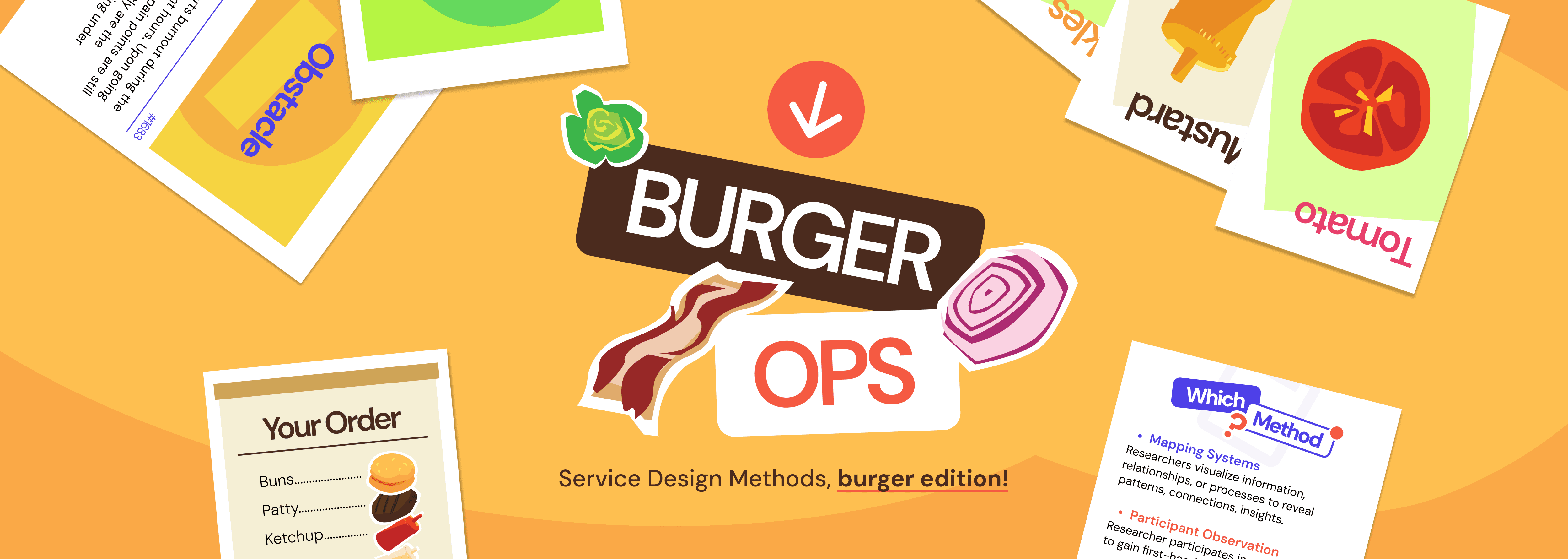
Burger Ops
Scenario driven card game that turns service design methods into play through real fast food service challenges.
Timeline
3 Weeks
Role
Graphic Design Lead
Game Developer
Research
Tools
Figma
Adobe Illustrator
Team
6 Members
Overview
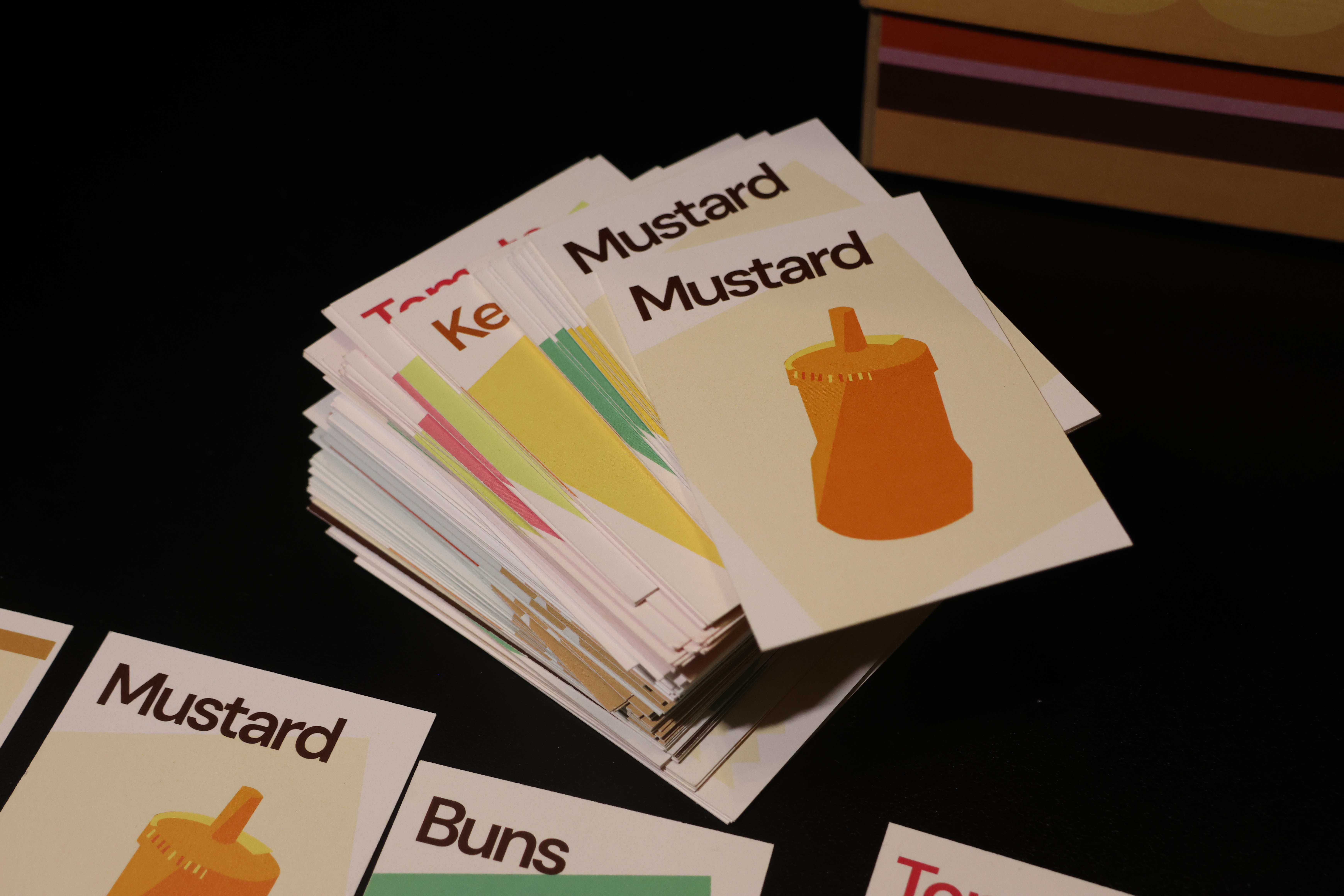
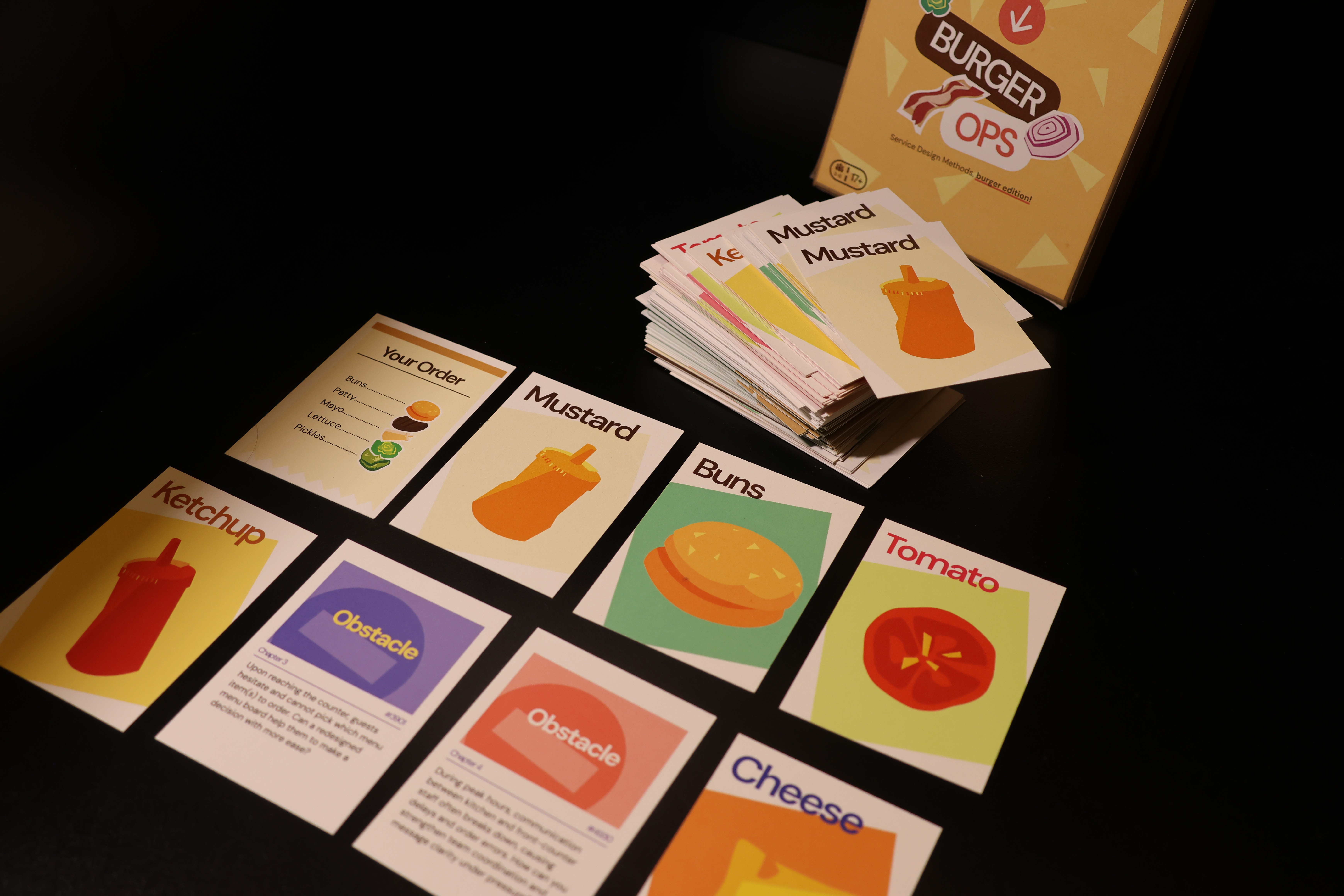
Burger Ops is a competitive card game where players act as fast food chain managers racing to complete a signature burger and earn the title of Manager of the Year. The game turns service design methods into hands on decision making through debate, reasoning, and resource strategy.
Prompt
Obstacle
How can we best determine the most interested groups of employees to head our future research and ideation?
Chapter 2
#1232
Obstacle
Chapter 2
#2625
We want to track which features on our website are used the most. Which method best displays this data to prioritize future updates if necessary?
Map the persona’s journey: each step, their emotions, problems, and improvement ideas.
Mapping Journey
Gathers and analyzes existing information to better understand the research context.
Preparatory Research
Non-participant Observation
Researcher observes participants’ behaviours and interactions without directly engaging or influencing them.
In-depth Interviews
One-on-one conversations to explore participants’ thoughts, experiences, and motivations in detail.
Which
?
?
Method
Obstacle
Complaints about long wait times, wrong orders, and general uncleanliness of the restaurant are rising, but the root of these problems is unclear. Where in their journey are problems occurring and how can you solve them?
Chapter 1
#1232
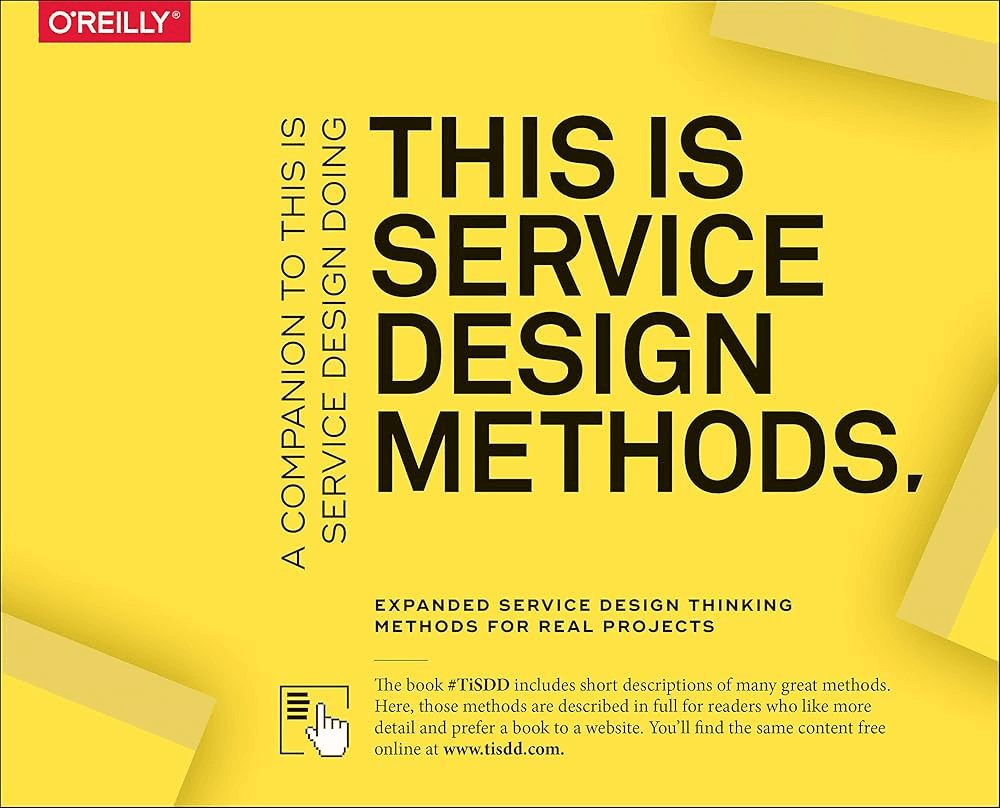
Design an educational card game that teaches concepts from
“This is Service Design Methods”, playable with 3–8 players in 35–40 minutes.
Constraints
The game needed to be easy to learn, fun to replay, and visually connected to the book’s core themes. Since it was a physical card game, every component also had to be print-ready, readable, and quick to understand during gameplay.
Brief Gameplay
Each player receives an order card with ingredients they need to complete their burger.
Order
Card
Your Order
Buns........................
Patty.......................
Mayo......................
Lettuce.................
Bacon....................
Shipment
Card!
Your Order Has Arrived!
Draw:
1x Buns
1x Tomato
Players discuss and choose a method, then reveal the correct answer. If more than one player is correct, the group awards the single Shipment Card to the player with the strongest explanation. If no one is correct, no Shipment Card is awarded and moves to the next round.
Each round, an Obstacle Card introduces a service challenge and method options.
Obstacle
Complaints about long wait times, wrong orders, and general uncleanliness of the restaurant are rising, but the root of these problems is unclear. Where in their journey are problems occurring and how can you solve them?
Chapter 1
#1232
Map the persona’s journey: each step, their emotions, problems, and improvement ideas.
Mapping Journey
Gathers and analyzes existing information to better understand the research context.
Preparatory Research
Non-participant Observation
Researcher observes participants’ behaviours and interactions without directly engaging or influencing them.
In-depth Interviews
One-on-one conversations to explore participants’ thoughts, experiences, and motivations in detail.
Which
?
?
Method
The round winner may trade once by asking one player for a specific ingredient. If they have it, they must trade; if not, the trade is cancelled.
Buns
Patty
First player to complete their burger becomes Manager of the Year!
My Role
Ideation
Contributed to gameplay concepts and the card system through team discussions and iteration.
Visual system
Co-created card graphics, typography, and colour system across all game components.
Production
Designed packaging and the final pitch deck for print-ready delivery.
Design Approach
THE INTENT
We wanted to design something people actually wanted to pick up, a game that sparked curiosity about service design rather than making it feel like studying. We prioritized reasoning over memorization, so players had to apply methods to real scenarios rather than recall definitions. The game also needed to feel competitive enough to stay engaging, but never so complex that it got in the way of the learning.
FROM BRAINSTORM TO CARDS
The design process started with a lot of brainstorming around theme. We explored different restaurant concepts before landing on fast food, which felt like the right fit, familiar, energetic, and naturally connected to the service design scenarios in the game. From there, I focused on the visual direction, spending most of the iteration refining colour and readability to make sure each card type was instantly recognizable during fast gameplay.

Playtest Findings
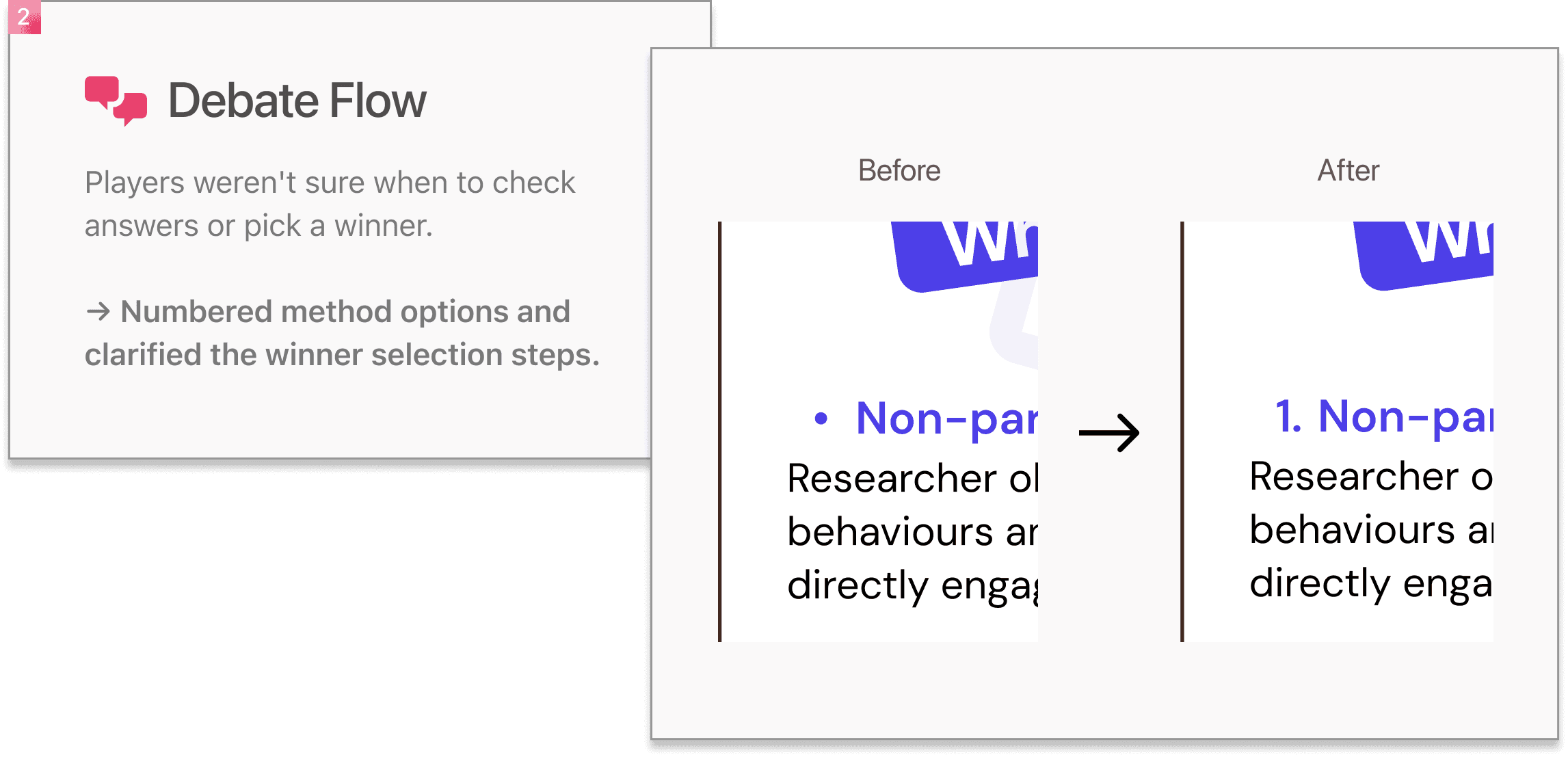
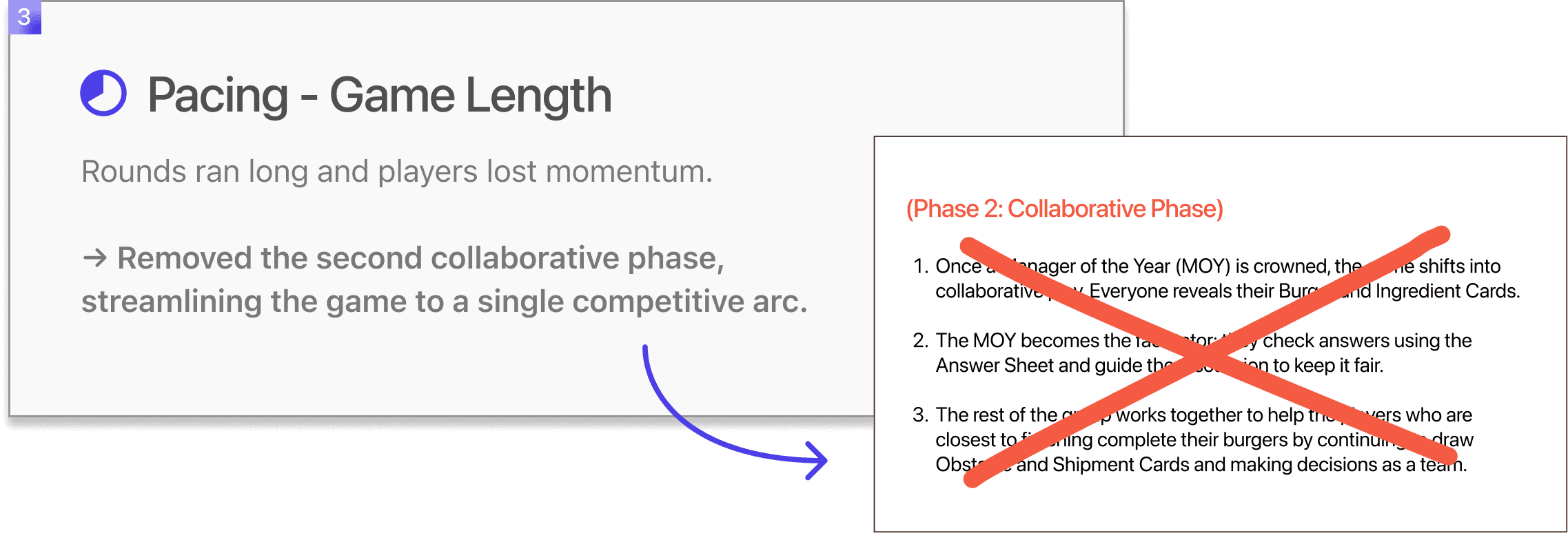
Playtesting revealed two main problems. We iterated directly on each one before final production.


Visual System
The visual system balances clarity and playfulness for a fast-food theme. Bold hierarchy and colour-coded card types make each deck easy to scan and set up, while food-inspired graphics keep everything cohesive across cards, packaging, and the pitch deck.

Final DELIVERABLES
Print-ready card deck & components
Instruction materials
Answer sheet
Game box packaging design
Pitch Deck


TAKEAWAYS
Visual clarity turned rules into play.
Designing Burger Ops taught me that small changes to numbering, layout, and visual hierarchy had a direct impact on how players understood and moved through the game. It also sharpened my ability to translate abstract concepts into tangible, playable systems, and reinforced how cross-functional collaboration shapes the final product when learning goals, pacing, and visual design all have to work together.
Next Project…
Myos
A speculative system that recreates emotional presence through scent and chemosignals.