A Dementia Care System Using Scent and Chemosignals
This was a 4-day speculative project for the Figbuild 2026 design competition.
Timeline
4 days
Role
Product Designer
UX Researcher
Visual Designer
Video Editor
Tools
Figma
Figma Make
Adobe Firefly
Team
4 People
What is Myos?
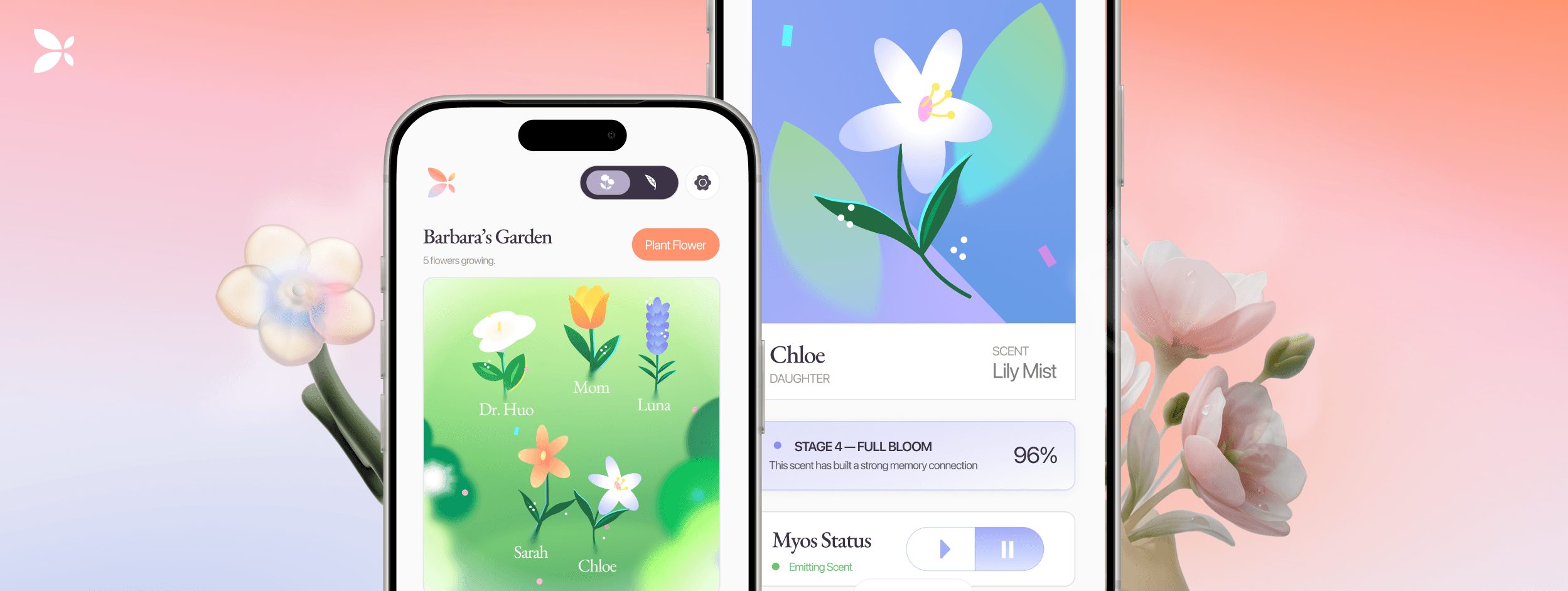
A Dementia-care app that works with a wearable clip and a room device. The clip captures a loved one’s natural scent signals, and the device releases them later to help the patient feel calm and familiar.
Caregivers use the app to choose whose signals are released and track how the patient responds.
The Problem
Every week, Chloe visits her grandmother Barbara. Barbara has dementia.
"There you are. I've missed you."

"I'm sorry… do I know you?"
Her brain literally cannot match Chloe's face to a memory.
On harder days, she gets anxious. She pulls away from someone she loves without knowing it.
Photos, video calls, voice recordings → These tools only work when Barbara recognizes the person.

55 million+
people living with dementia worldwide right now, and rising every year.

Up to 70%
of dementia patients experience agitation or distress, often triggered by moments exactly like this.
94%
of family caregivers say it's genuinely hard to keep showing up when the person they love no longer knows them.
How might we help someone with dementia feel comforted by a loved one's presence, even when their brain can no longer place who that person is?
What we found
Scent can affect how we feel before the brain consciously identifies where the smell comes from.
Scent-based therapy is already used in dementia care to reduce anxiety and agitation.
KEY INSIGHT
Chemosignals are invisible chemicals our bodies release that can make others sense stress, comfort, or familiarity. Even when someone with dementia no longer recognizes a loved one, they may still respond to these signals.
The Pivot
First instinct
A wearable that recreates a loved one's favourite fragrance.
The problem
Fragrance creates comfort, but not personal familiarity.
The fix
Pair scent with that person's chemosignals, not just their smell.
What if Chloe could...
Leave a piece of her presence behind automatically, every time she visits?
Make Barbara feel calmer the moment she walks in, before Barbara has to recognize her face?
Know whether what she's doing is actually helping, without having to ask?
Solution
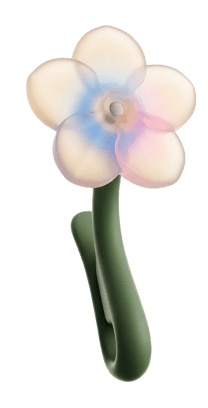
Forget-Me-Not Clip
Records the visitor's chemosignals automatically. Gets more accurate with every visit.

Scent release outlet
Centered outlet, releases scent gently and evenly

Wearable clip
Secure, lightweight clip attaches easily to pockets, collars or bags

Myos Device
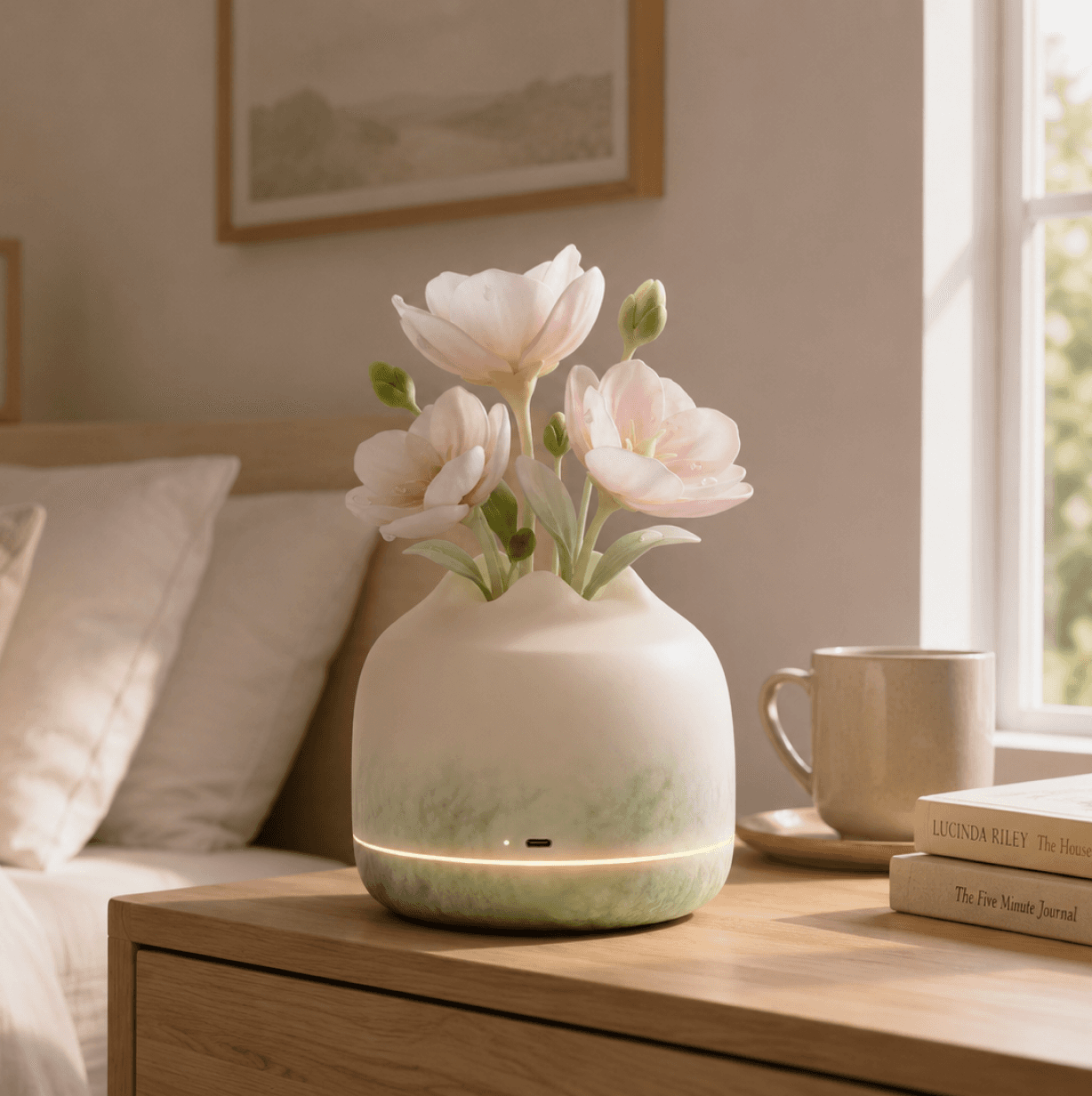
Releases the visitor's recorded scent and chemosignals when activated remotely. Runs silently.

Releases scent and chemosignals
Gently recreates a loved one’s presence in the room.
Active light ring
Glows when releasing a presence.
Caregiver App
One place to control everything and see what's working.
Actively tracking
The clip is collecting. No action needed.
Active
Sarah
2h
→
View Toggle
Switch between garden and list view.
Plant Flower
Begin capturing someone's presence.
Plant Flower
The Presence Profile
Every visit gets recorded. The more someone shows up, the stronger their scent signature becomes. When Barbara needs them, a caregiver can release that scent into the room, from anywhere.
Insights
Shows who brings her the most calm, who triggers recognition, and who is fading, so visits can be planned around what actually helps her
Who actually uses this
Myos is built for caregivers, not patients. Someone with mid-to-late dementia can't navigate an interface but their family can, on their behalf.

The Patient
Receives the experience

The Caregiver
Manages the interaction
Tracks patterns. Activates presence signatures.

What still needs to be validated
Because this was a four-day speculative project, we did not test Myos with people living with dementia or their families.
1
Does Myos actually reduce anxiety?
Our concept is based on published research, but the full system has not been tested in real care settings.
2
Can chemosignals be captured and replayed?
The science exists, but consumer technology cannot yet do this accurately.
3
How much data is enough?
Before building the next version, we would need to know how much chemosignal data is required to create a measurable calming effect. This would shape the hardware, clip design, and capture time.
What this project reinforced
Designing for caregivers made the patient experience simpler. By removing the need for patients to use an interface, Myos could work quietly in the background.
Branding
The name Myos comes from Myosotis → the forget-me-not flower.
That's why each visitor appears as a flower in the app. It's not decorative, the garden is the data display, and the name is where the visual system came from.

Final LOGO
I explored petal-based forms and developed them into a butterfly built entirely from petals. The result balances warmth and care with the precision expected from a healthcare product.
Next Project…
Product Design & UX Research
Unigo
Helping students find their classroom on the first try.